


Introduction
Puerto Vallarta has established itself as a destination that goes beyond its paradisiacal beaches and vibrant tourist life.
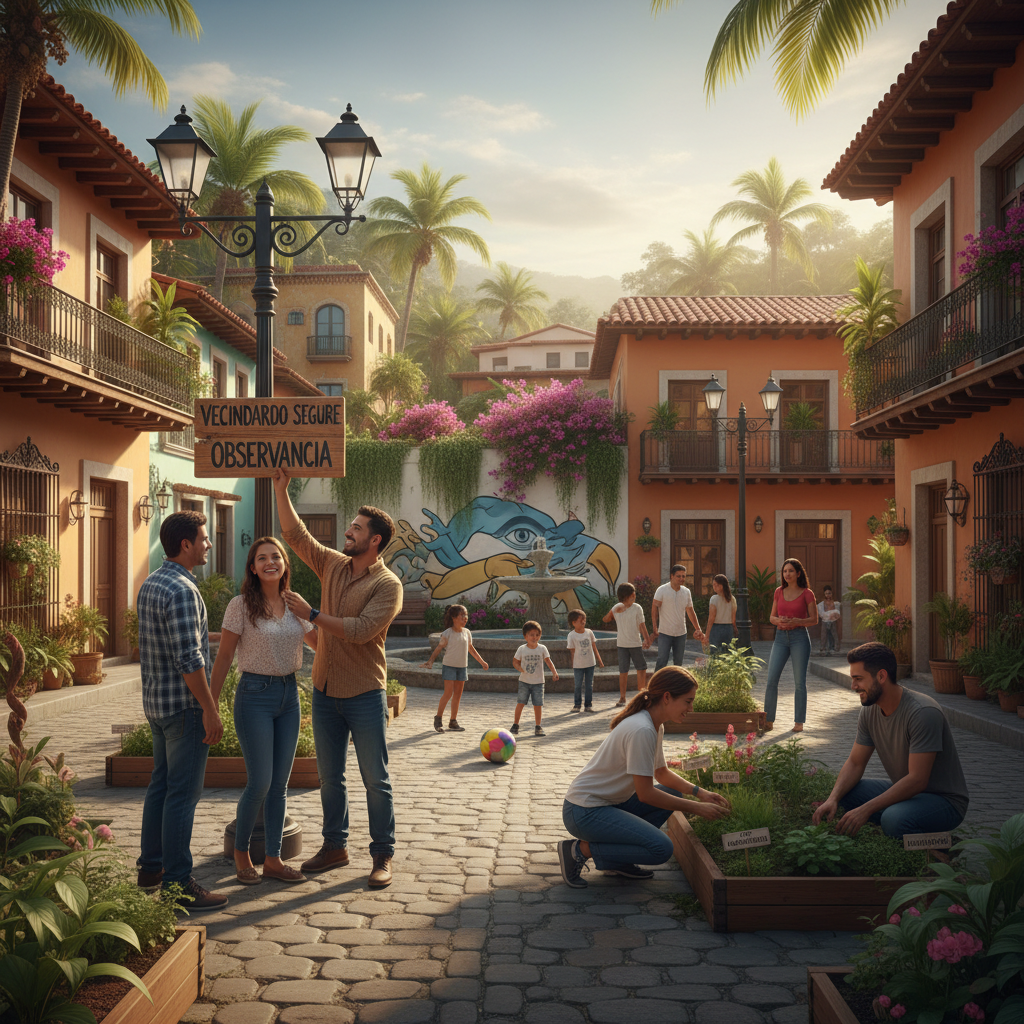
In recent years, the city has experienced a remarkable growth in collective awareness about the importance of building safer, more inclusive, and cohesive communities.
This social awakening has given rise to numerous community initiatives that seek to strengthen both citizen security and neighborhood ties, fundamental aspects to guarantee a better quality of life for both residents and visitors.
The diversity that characterizes Puerto Vallarta, with a population that includes local residents, established foreigners, and a significant LGBT+ community that contributes approximately 40 percent of local tourism revenue, has created an environment conducive to the development of innovative community programs.
This multicultural richness is reflected in projects that address everything from traditional public safety to the specific needs of vulnerable groups, creating a more resilient and participatory social fabric.
Community initiatives to strengthen security and social cohesion in Puerto Vallarta represent a model of collaboration between citizens, civil organizations, and local authorities.
These efforts have not only helped reduce the perception of insecurity in various sectors of the city, but have also fostered a sense of belonging and shared responsibility that transforms the way Vallarta residents relate to their environment and to each other.
Current overview of safety and quality of life in Puerto Vallarta: challenges and progress
Puerto Vallarta faces challenges typical of a constantly expanding tourist city, where the coexistence of consolidated residential areas and recent real estate developments poses differentiated security needs.
The rapid growth of certain sectors has put pressure on public services and urban infrastructure, while some traditional neighborhoods maintain deep-rooted community dynamics that facilitate natural neighborhood watch.
The city's unique geography, with mountainous areas and scattered neighborhoods, adds complexity to the coordination of uniform security efforts.
Improvements in quality of life have been evident on multiple fronts in recent years. The professionalization of services aimed at specific populations, such as specialized sexual health care for the LGBT+ community, reflects a deeper understanding of the diverse needs that coexist within the municipality.
These improvements are not accidental, but the result of years of community work that has managed to make previously ignored problems visible and build coordinated responses among different social actors.
The perception of safety among Vallarta residents varies significantly depending on the area of residence and the level of neighborhood organization.
Neighborhoods with active neighborhood committees report greater satisfaction with their immediate surroundings and a faster response to security incidents.
This contrast shows that security does not depend solely on the authorities, but requires the active participation of those who inhabit each space, making residents the protagonists of their own protection and well-being.
Key community initiatives to strengthen security in Puerto Vallarta
Strengthening security in Puerto Vallarta has taken various forms depending on the needs of each community. Some of the most significant initiatives include programs that address both the prevention and response to situations that affect neighborhood peace and tranquility.
– Organized neighborhood watch networks that operate through instant messaging groups and regular meetings to coordinate prevention efforts
- – Specialized community centers that offer accessible and confidential health services, including sexual health care, rapid testing, and free treatment for sexually transmitted infections
- – Lighting and public space improvement programs led by residents in coordination with municipal authorities
- – School safety committees that involve parents in protecting educational environments
- – Workshops on domestic violence prevention and support networks for victims coordinated by civil society organizations
These actions have demonstrated that effective safety requires multidimensional approaches. For example, community centers that provide confidential testing for HIV, hepatitis, syphilis, chlamydia, and gonorrhea not only address urgent medical needs but also create safe spaces where people can access information and support without fear of discrimination.
This type of initiative has positively impacted hundreds of residents and visitors during its first years of operation.
The sustainability of these programs depends largely on strategic partnerships. Agreements with government institutions to facilitate access to preventive treatments such as pre- and post-exposure prophylaxis for HIV exemplify how collaboration between community and government can multiply the reach of interventions.
These community safety initiatives in Puerto Vallarta have set a precedent for how to address complex problems through citizen empowerment and the professionalization of services.
How community initiatives foster social cohesion in Puerto Vallarta
Social cohesion in Puerto Vallarta has been significantly strengthened through initiatives that go beyond physical security to address the overall well-being of the community.
The meeting spaces generated by community projects have allowed residents of different backgrounds, nationalities and sexual orientations to establish meaningful connections.
This coexistence has been particularly enriching in a city where Mexicans, permanent resident foreigners, and a vibrant LGBT+ community live together, the latter having found in Vallarta a destination of historic hospitality.
Community programs function as catalysts for integration by creating common goals that transcend individual differences.
When neighbors from different backgrounds work together on the rehabilitation of a park, the organization of a surveillance program, or the support of a community health center, bonds based on reciprocity and mutual respect are generated.
This ongoing collaboration process gradually transforms the way people perceive those they initially considered different or outsiders.
The inclusion of historically marginalized populations in the design and operation of community initiatives has been fundamental to strengthening authentic social cohesion.
The focus on respect and professionalization of services aimed at specific groups, influenced by comprehensive care models and experience in mental health, has established quality standards that benefit the entire community.
When people see their particular needs recognized and met with dignity, their sense of belonging and their willingness to contribute to collective well-being are strengthened.
Positive impact of neighborhood actions on local quality of life
The impact of organized neighborhood actions is evident in multiple aspects of daily life in Puerto Vallarta.
The reduction in response times to local emergencies, the decrease in minor crimes in neighborhoods with active neighborhood watch programs, and the increase in recovered public spaces are tangible indicators of these changes.
However, the most profound effects are seen in less quantifiable but equally important dimensions: increased interpersonal trust, a willingness to help neighbors in difficult situations, and pride in belonging to a proactive community.
Quality of life has also improved substantially in the area of community public health. The availability of accessible and confidential specialized medical services, offering everything from rapid testing to free treatment for detected infections, has transformed how residents and visitors approach their sexual health.
This access has proven especially valuable in urgent risk situations, such as cases of unprotected sex or sexual assault, where the immediate availability of post-exposure prophylaxis can make a vital difference.
Neighborhood initiatives have also generated a multiplier effect on the local economic and social fabric. Neighborhoods with stronger community organization tend to exhibit greater commercial dynamism, better infrastructure, and greater attractiveness to new residents and investors.
This virtuous cycle demonstrates that investment in social cohesion and community safety not only improves the immediate well-being of residents, but also strengthens the competitiveness and sustainability of Puerto Vallarta as a quality residential and tourist destination.
Practical tips for getting involved in community initiatives in Puerto Vallarta and contributing to safety
Actively participating in community initiatives in Puerto Vallarta is more accessible than many residents realize. The first step is to identify neighborhood organizations or community groups operating in your neighborhood or area of residence.
Many of these groups maintain a presence on social media or hold regular meetings open to the public where they publicize their projects and needs.
Attending one of these meetings as an observer allows you to understand the group dynamics before committing to specific tasks.
Once you have identified the initiative that best suits your interests and availability, it is advisable to start with specific and manageable contributions.
It is not necessary to assume leadership responsibilities from the beginning; collaborating on specific tasks such as disseminating safety information, providing logistical support at community events, or participating in cleaning and beautifying public spaces allows you to become familiar with collective work while contributing immediate value.
This gradual approach also facilitates building trusting relationships with other members of the community.
For those who wish to get involved in more specialized aspects of community initiatives, such as health programs or violence prevention, there are training and volunteer opportunities at specialized centers operating in the city.
These spaces frequently require people willing to collaborate in administrative tasks, translation, dissemination of services or support in educational events.
The key to sustainable participation is finding the balance between the commitment made and the actual capabilities of each person, remembering that consistency in small actions generates a greater impact than sporadic efforts of great intensity.
Conclusion
Community initiatives to strengthen security and social cohesion in Puerto Vallarta represent much more than isolated prevention or surveillance programs.
They constitute a comprehensive model of community building where citizen participation, professionalization of services and inclusion of diverse populations combine to create safer, healthier and more supportive environments.
The tangible results obtained in different neighborhoods and sectors of the city demonstrate that when residents take an active role in transforming their environment, the changes are deeper and more sustainable than those imposed solely from government structures.
The future of Puerto Vallarta as a quality destination for residents and visitors will depend largely on the collective ability to maintain and expand these community initiatives.
The accumulated experience has shown that investment in social cohesion and comprehensive security not only improves the immediate quality of life, but also strengthens community resilience to future challenges.
Every resident who decides to get involved, every organization that professionalizes its services, and every authority that facilitates citizen collaboration contributes to consolidating a model of coexistence that distinguishes Puerto Vallarta as a truly inclusive community committed to the well-being of all its inhabitants.

 Spanish
  English
  French
  Chinese