


Introduction
Puerto Vallarta represents one of Mexico's most emblematic tourist destinations, where the visitor experience is closely linked to the quality of life enjoyed by its residents.
This coastal city has developed a growth model that transcends the simple hotel offering, incorporating dimensions of social welfare, citizen security and environmental sustainability as fundamental pillars of its tourist appeal.
The interrelationship between these elements has not only improved the living conditions of the local population, but has also created a virtuous circle where sustainable tourism and investment feed back into community development.
In the current context of global tourism, travelers seek authentic experiences in destinations that demonstrate a real commitment to the well-being of their inhabitants and the care of the natural environment.
Puerto Vallarta has responded to this demand by implementing public policies and private projects that prioritize sustainability without sacrificing economic competitiveness.
Tourism infrastructure has expanded in a planned manner, while indicators of citizen security, access to basic services and preservation of cultural heritage have shown positive trends.
The convergence between quality of life and sustainable tourism in Puerto Vallarta is not accidental, but the result of years of strategic investment from both the public and private sectors.
This synergy has positioned the destination not only as a place for temporary visits, but as a viable option for permanent residence for foreigners and Mexican professionals, which in turn raises the standards of services, education and urban development.
The result is an ecosystem where residents and visitors share tangible benefits of a comprehensive development model.
Importance of quality of life and sustainable tourism in Puerto Vallarta
The quality of life in Puerto Vallarta constitutes a key competitive differentiator compared to other tourist destinations in Mexico and Latin America.
While many coastal cities experience environmental and social deterioration due to mass tourism, Puerto Vallarta has implemented an approach that integrates economic development with the preservation of natural resources and the strengthening of the social fabric.
This vision has allowed us to maintain high satisfaction levels among both residents and visitors, creating a reputation as a responsible destination that attracts tourist segments with greater purchasing power and longer stays.
Sustainable tourism in Puerto Vallarta is not limited to isolated ecological practices, but encompasses an integrated system that includes responsible water management, waste treatment, protection of marine and terrestrial ecosystems, and orderly urban development.
Banderas Bay, where Puerto Vallarta is located, is home to exceptional biodiversity that requires continuous protection to maintain its ecological and tourist value.
Conservation initiatives not only preserve natural heritage, but also generate economic opportunities through ecotourism and low environmental impact activities.
The strategic importance of linking quality of life with sustainable tourism lies in building long-term economic resilience. Destinations that depend exclusively on extractive tourism models face boom-and-bust cycles that generate social and economic instability.
In contrast, Puerto Vallarta has diversified its economy by strengthening complementary sectors such as professional services, technology, gastronomy and culture, taking advantage of the infrastructure and connectivity developed for tourism.
This economic diversification directly contributes to raising the living standards of the local population, reducing dependence on seasonal jobs and promoting higher value-added professional development.
Factors that contribute to citizen security and social well-being in Puerto Vallarta
Citizen security in Puerto Vallarta is based on a multidimensional approach that combines effective surveillance, social cohesion, and inclusive economic development.
Unlike other tourist destinations that present marked contrasts between protected tourist zones and marginalized areas, Puerto Vallarta has worked to expand the benefits of tourism development to traditionally underserved communities.
This strategy reduces inequalities that frequently generate social conflicts and deterioration of public safety, creating an environment where both residents and visitors can move around peacefully in most urban areas.
Structural factors that support social well-being include increasing access to quality health services, diversified educational options from basic to higher levels, well-maintained public spaces, and functional transportation systems.
The presence of established international communities has contributed to raising standards of professional services, especially in areas such as private health, where several hospitals offer care with international certifications.
The cultural and recreational offerings have expanded considerably, including theaters, galleries, sports venues, and world-class cultural events that enrich the experience of both residents and visitors.
The development of planned urban infrastructure has been another fundamental pillar of social well-being. Comprehensive residential projects that include amenities such as social clubs, green spaces, sports facilities, and local shops have raised housing standards.
Developments like Altea Casas, strategically located near areas like Nuevo Vallarta, exemplify how real estate investment incorporates community spaces that promote healthy social interaction, including bike paths, pet parks, outdoor gyms, and multifunctional sports areas.
These shared spaces strengthen community ties that are essential to maintaining safe and socially cohesive environments.
Initiatives and policies to promote sustainable tourism and improve quality of life
Municipal and state authorities in Jalisco have implemented Specific public policies aimed at consolidating Puerto Vallarta as a benchmark in sustainable tourism.
Among the most significant initiatives are the certification of clean beaches, coastal reforestation programs, strict regulation of construction in ecologically sensitive areas, and wastewater treatment schemes that protect the quality of the sea.
These measures respond both to environmental commitments and to the practical need to preserve the natural resources that constitute the main attraction of the destination.
Investment in connectivity and accessibility has been a priority to sustain tourism growth without compromising the quality of local life.
He Puerto Vallarta International Airport has significantly expanded its operations, Meanwhile, the Jalisco region as a whole has incorporated dozens of new national and international air routes.
This connectivity not only facilitates the arrival of tourists, but also the integration of Puerto Vallarta into global commercial and professional networks, attracting qualified human talent and business opportunities that diversify the local economy beyond the traditional tourism sector.
The private sector has responded with substantial investments in high-quality hotel infrastructure and residential projects that meet sustainability standards.
The construction of new properties increasingly incorporates criteria of energy efficiency, responsible water resource management and design that respects the natural landscape.
At the same time, accessible financing options have been developed that allow local workers to access decent housing through schemes such as INFONAVIT, FOVISSSTE and specialized bank loans, democratizing access to the benefits of real estate development and contributing to reducing the socio-spatial segregation that affects many tourist cities.
Impact of sustainable tourism on the local community and its quality of life
Sustainable tourism has generated tangible transformations in the economic and social structure of Puerto Vallarta, resulting in concrete improvements for the resident population.
Job creation is not limited to operational positions in hotels and restaurants, but has expanded into specialized sectors such as hotel management, digital marketing, professional gastronomy, specialized ecotourism guides, and various professional services.
This diversification of employment offers career development paths that increase family income and reduce the job insecurity characteristic of traditional seasonal tourism.
The continued presence of international visitors has stimulated the development of services that directly benefit the local community, including international cuisine restaurants, specialized commercial establishments, bilingual schools, and international standard medical services.
Local residents have access to a significantly more diversified range of shops and services than is available in comparable-sized cities without a tourist focus, improving their daily quality of life.
Additionally, the ongoing cultural exhibition with visitors from diverse backgrounds enriches the social environment and generates exchange opportunities that broaden perspectives, especially among younger generations.
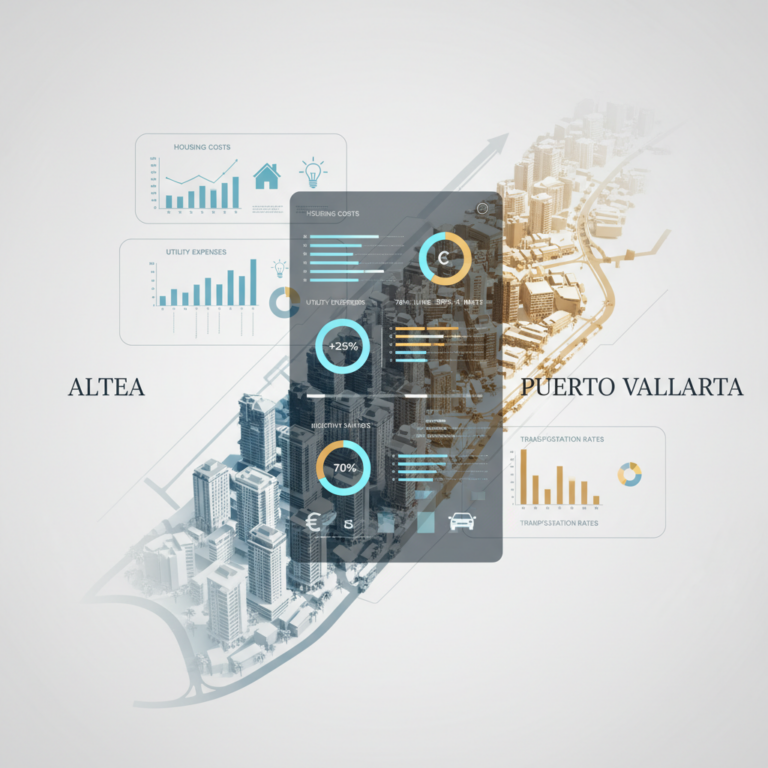
However, the model is not without its challenges. The increase in real estate demand driven by foreign buyers and tourism development has generated inflationary pressures in the housing market that could make it difficult for local low- and middle-income workers to access housing.
This situation has motivated the implementation of housing projects specifically aimed at key labor sectors, with facilitated financing options and strategic locations that allow accessibility without sacrificing quality.
Balancing tourism growth with affordable housing for residents remains a priority to sustain the inclusive development model that has characterized Puerto Vallarta.
How culture and social experience influence quality of life and safety in Puerto Vallarta
The cultural identity of Puerto Vallarta is built on a unique fusion between Mexican traditions and international cosmopolitanism, creating a distinctive social environment that simultaneously contributes to quality of life and citizen security.
The preservation of traditional festivities, regional gastronomy and local artistic expressions coexists harmoniously with the incorporation of international cultural manifestations, generating a social fabric characterized by tolerance, openness and respect for diversity.
This inclusive environment not only attracts visitors who value authentic cultural experiences, but also strengthens social cohesion among residents from diverse backgrounds.
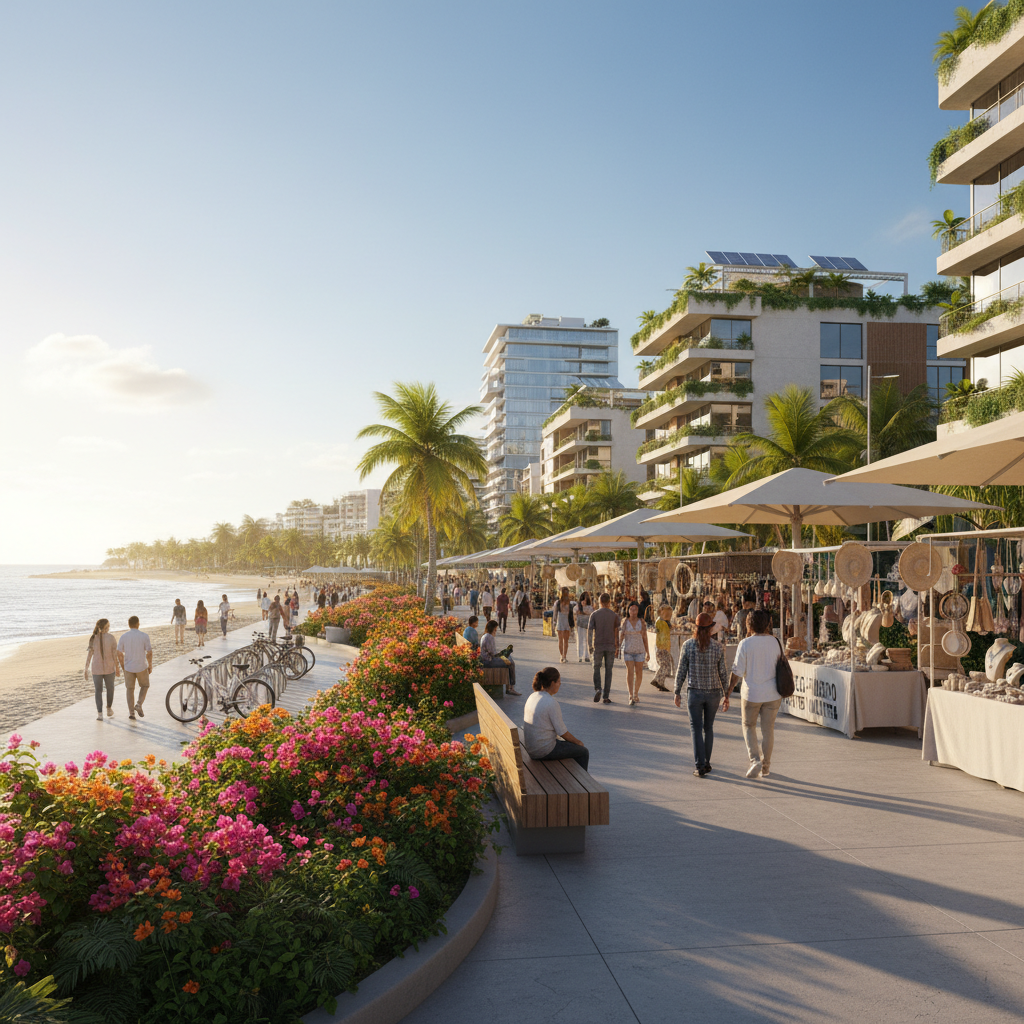
The everyday social experience in Puerto Vallarta is characterized by active and safe public spaces where both residents and visitors converge.
The boardwalk, public squares, traditional markets and gastronomic areas function as meeting points that promote positive social interaction and natural surveillance of public space.
This urban vitality, supported by adequate lighting, constant maintenance, and a discreet but effective police presence, creates environments that inhibit antisocial behavior and strengthen the perception of safety.
The extended commercial and social activity during nighttime hours helps to keep streets busy and informally monitored by the community itself.
Puerto Vallarta's gastronomic and cultural scene has evolved into an attraction in its own right, transcending the traditional sun and beach model.
The consolidation of a world-class culinary offering, regular cultural festivals, art galleries, and sporting events has raised the profile of the destination and attracted visitor segments with deep cultural interests.
This diversification of the tourism profile reduces extreme seasonality, distributing economic benefits more evenly throughout the year and generating job stability that directly contributes to social well-being.
Culture thus becomes an economic, social and security asset that reinforces the comprehensive development model that characterizes Puerto Vallarta.
Conclusion
Puerto Vallarta has demonstrated that quality of life and sustainable tourism are inseparable elements of a successful and resilient development model.
Strategic investment in infrastructure, public services, citizen security, and environmental preservation has not only improved the living conditions of residents, but has also consolidated the destination as an international benchmark in responsible tourism.
The ability to balance economic growth with social welfare and environmental protection differentiates Puerto Vallarta from destinations that prioritize short-term profits at the expense of community and ecological deterioration.
The outlook for the future is favorable as long as the commitment to inclusive public policies and effective regulation of urban development is maintained.
The challenges related to housing accessibility for local residents and pressure on natural resources require continuous attention through responsible territorial planning and mechanisms that guarantee equitable distribution of economic benefits.
Puerto Vallarta has the opportunity to consolidate itself as a replicable model of tourist destination where economic prosperity, quality of life for citizens and environmental sustainability reinforce each other, demonstrating that tourism development can be an engine of integral well-being when implemented with strategic vision and genuine social commitment.

 Spanish
  English
  French
  Chinese